
Allegheny County Crime News Sources
Go to the agency that produced the information first. The Allegheny County District Attorney press-release page announces prosecution news directly. The county's own police-filtered press releases serve the same official role for county government. Neither one works as a booking feed. Treat them as announcements about selected cases, not a complete arrest list for the county.
Pittsburgh has its own channel. The Pittsburgh Public Safety Blotter posts city incident entries, which refresh automatically whenever a Public Information Officer change occurs. That makes it handy for current context around a city incident. It will not confirm an Allegheny County Jail admission or hand you a booking photo. Penn Hills and Mount Lebanon run separate police news outlets of their own, so city reporting and county custody records are different animals.
Each source has its own job. A police release explains what an agency reported. A jail contact can answer a custody or booking-date question where policy allows. The court record carries the case from charging forward. None of them amounts to a county photo directory.
Allegheny County News Outlet Coverage
Local outlets can post several updates a day. Coverage still depends on public interest and staffing. Pittsburgh, Penn Hills, Mount Lebanon, and other municipalities show up when something draws eyes. No outlet promises every county arrest. The table below separates what gets covered from the limits on images and record claims.
| Outlet or channel | Coverage pattern | Photo and record boundary |
|---|---|---|
| Allegheny County District Attorney | Official charging and prosecution announcements when the office issues a release. | May use agency or case-related material. It is not an ACJ roster or a conviction record. |
| Allegheny County police releases | Official county announcements tied to county police activity. | May contain agency photographs, but does not promise a person-level booking feed. |
| WPXI | Frequently updated Allegheny crime, public-safety, court, arrest, and fugitive reporting. | Uses reporter, scene, surveillance, police, release, or file images. No fixed booking-photo practice was found. |
| WTAE | Frequent local reporting on city and suburban agencies. | Can use agency-release, scene, surveillance, or official images rather than a standing mugshot gallery. |
| Pittsburgh Post-Gazette | Regular Crime & Courts reporting from police, prosecutors, court records, meetings, and reporting. | Byline, scene, file, agency, or court-related images vary by story and are not a roster. |
| CBS Pittsburgh and TribLIVE | Regional, event-driven crime and court reporting. | Neither was found to maintain a continuous Allegheny County mugshot gallery. |
A headline often runs ahead of the docket. A reporter can faithfully pass along what police stated at the time. Later court events may still shift the case. So keep the attribution you see, whether it reads "police said" or "according to a complaint," and let the court record settle the rest.
Allegheny County News Screens
WPXI's Allegheny County local-news page offers a frequently refreshed starting point for regional stories the station chooses to cover.
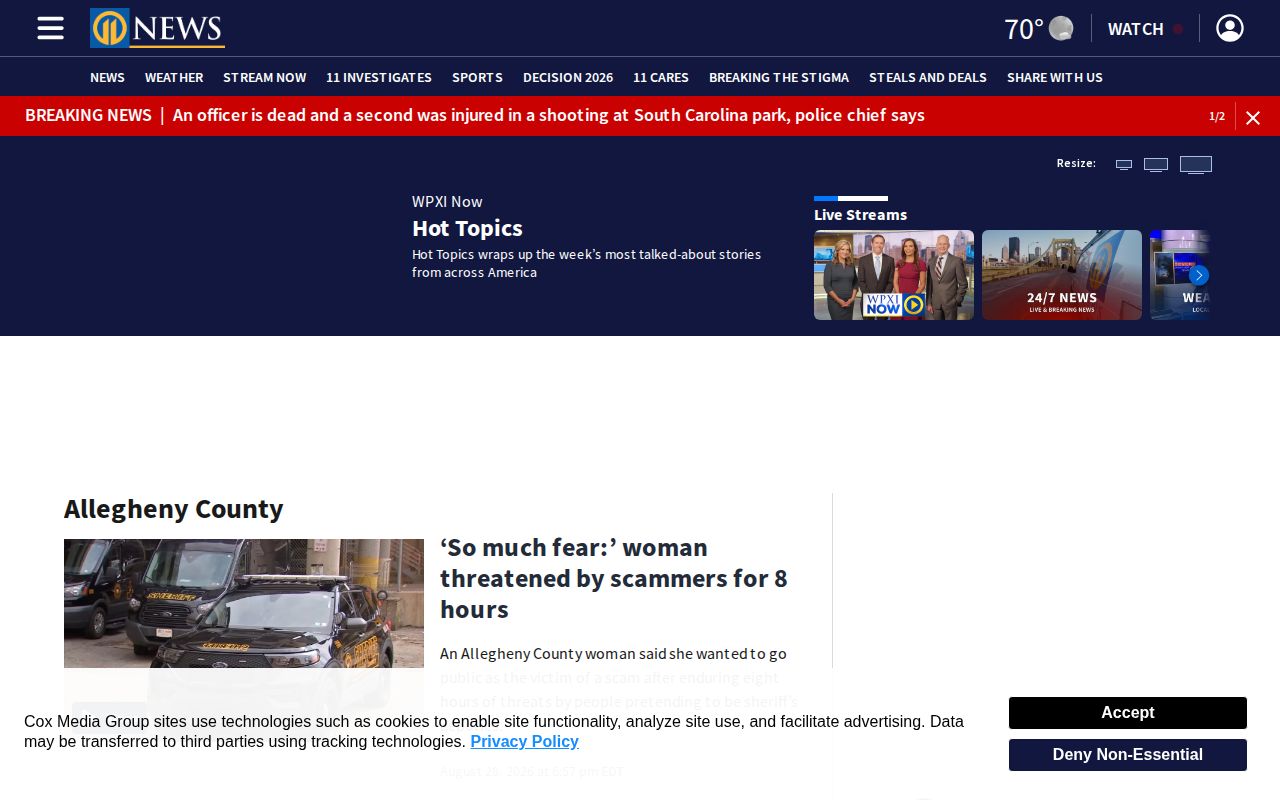
That WPXI page is an outlet landing page. It is not a custody search. It is not a wanted list or a booking-photo result. A story there might carry a police photo, a scene shot, surveillance footage, an agency release image, a reporter's own picture, or a stock file photo. Those are editorial choices. None of them means the county jail posts a matching photo. WTAE's Local News page is another frequent source, with coverage stretching across the county's cities and suburbs.
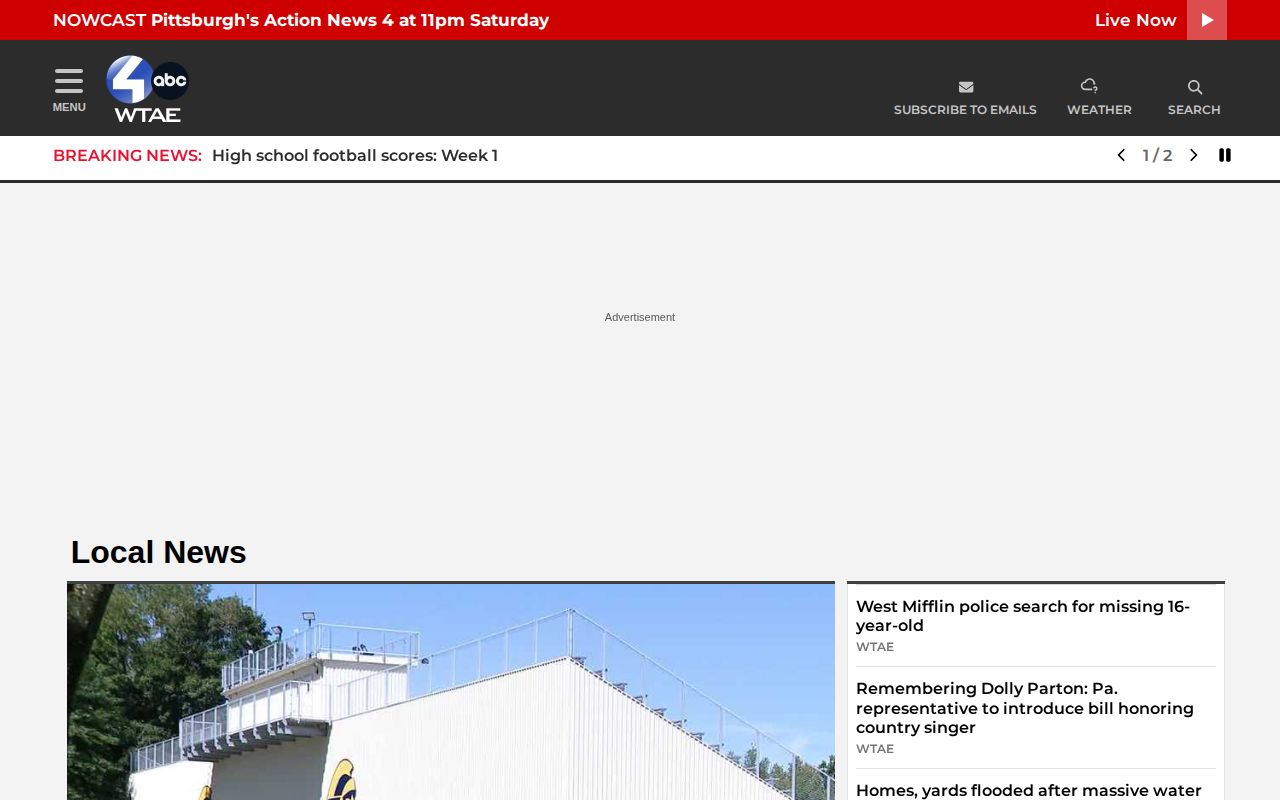
WTAE's local-news section is a stream of stories, not a set of jail images. One story there labeled a picture as an Allegheny County release photo. That shows how agency material travels to news pages. It says nothing about ACJ running a public image feed. The Pittsburgh Post-Gazette Crime & Courts section blends court, police, prosecutor, and reporter-sourced coverage on a regular basis.
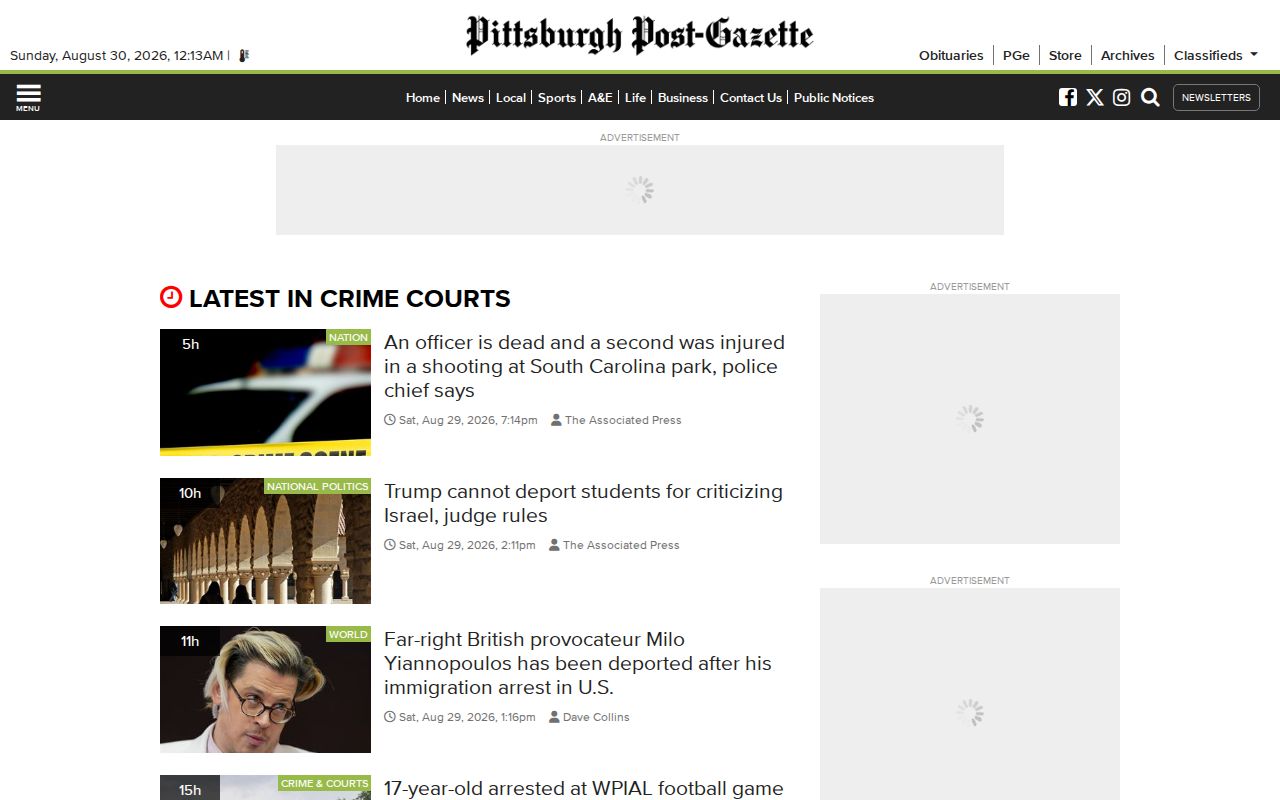
The Post-Gazette section is an index of crime-and-courts stories, not an Allegheny County arrest database. It is a solid way to follow selected court reporting. For actual case status, the docket underneath remains the authority.
Allegheny County Photo Release Limits
News photographs travel several routes to readers. Police or prosecutors may hand out an agency image. A reporter might use a scene photo, video, surveillance stills, court material, or a file picture. That explains why a story can run a photo while an official jail search turns up nothing. An editorial image is still not a custody record.
Allegheny County Jail's published policies state that the county and jail do not disseminate mugshots to noncriminal-justice agencies. There is no public searchable ACJ roster with booking-photo results, no same-day or multi-day photo feed, and no mainstream newspaper running a rolling county mugshot gallery. The boundary matters: a local news image can be official-release material without being a jail record.
Allegheny County Story to Court Record
A news item is a starting point, never the last word. Jot down the agency, date, location, the exact name spelling, and any docket number the story mentions. Then take that detail to the official source that fits your question, whether it is a custody question, a police report, or a court file. Keeping those paths separate saves confusion later.
- Read the story’s attribution and identify the agency or court named in it. A reporter’s account can point to a release, complaint, or hearing, but it does not replace that record.
- Look for the corresponding official county, police, prosecutor, or court release. A city incident may be in the Pittsburgh blotter, while a county prosecution item may appear on the District Attorney page.
- For a limited custody or booking-date question, use the official Allegheny County Jail contact path. The county does not publish a public ACJ person-level photo roster, so a story cannot be matched to a gallery.
- Search the Pennsylvania UJS docket portal by participant name and Allegheny County. Read the dated docket events rather than stopping at the original charge.
- When a filing is not available online or an official copy matters, ask the Clerk or Department of Court Records about the identified case file.
Processing, booking, and court events rarely land on the same day. ACJ's operational materials put probable-cause and bail steps at the pre-arraignment lock-up stage. The UJS docket picks up the later proceedings. So a story can be fully accurate when published. It can still grow incomplete as the case moves along.
Allegheny County Charge and Disposition
A charge entered at booking is only the start. The Pennsylvania UJS docket-sheets information page lays out the official statewide route for Common Pleas dockets. That is where a case truly takes shape. As things move forward, the docket fills in: a preliminary hearing, an arraignment, a plea, a trial, a dismissal, a withdrawal, a nolle prosequi, ARD or another diversion, sentencing, probation, payments, or an appeal. Each entry carries its own legal meaning. The docket is where they live.
"Disposition" means whatever the court recorded as the outcome. It tells you whether an original charge was changed, dropped, routed into a diversion program, or decided at a later stage. A news story can sit online for years. The docket behind it keeps moving. So the docket is the record that counts.
Need local confirmation instead? The Allegheny County Criminal Records page points to the Department of Court Records Criminal Division at 436 Grant Street, Room 114, Pittsburgh, PA 15219-2469. Public hours run Monday through Friday, 8:30 a.m. to 4:30 p.m. Case information is not given over the phone. Current-year files plus the prior four years sit at the courthouse. Older files are stored records.
Note: A docket may lag a recent filing and does not replace a certified criminal-history request or a full clerk file.
Allegheny County Secondary News Claims
Treat third-party pages as secondary at best. Some carry a county label and date filters aimed at older years, not any dependable current booking window. Others are Pennsylvania-facing pages from commercial services with no verified Allegheny County route behind them. A county name proves nothing. A dated card proves nothing. Even a photograph proves nothing about where an arrest happened, who is in custody, or whether a listed charge still stands.
Some commercial listings have no traceable Allegheny presence, no update schedule, and no local photo source that can be pinned down. Their pages can be incomplete, copied from elsewhere, stale, wrong, or vague about where an image came from. None belongs on a record-access path. None should outrank the agency that issued the release or the court that logged the case events.
The strongest habit is to follow news back to its public source. Let a local report tell you which office handled the arrest. Then check the latest court development through UJS or the clerk. That keeps the public record in front and the hearsay behind it.