
Pittsburgh Busted Mugshots
Pittsburgh is the seat of Allegheny County and its biggest city. City police work a heavy urban beat. County, state, and special units back them up. Those extra forces cover the airport, campuses, and public property. A city arrest can move fast: an incident report, a quick identification step, then arraignment. If the adult is committed after that, the Allegheny County Jail, or ACJ, takes custody. So the police source and the jail source answer two different questions. That split matters for anyone hunting who got busted in Pittsburgh. A blotter entry shows public-safety staff released details of an event. It cannot tell you whether the person entered ACJ, is still held, or has a booking photo online. The county jail is the right path after commitment. Even so, it offers no public roster of names and pictures. Arrested, booked, held, released, charged, and convicted each carry a distinct meaning here.
Pittsburgh Busted Booking Channels
Start with the official channels. The city's Public Safety Blotter shares incident details. ACJ answers questions about county custody. Neither one posts a public mugshot gallery. The jail's policy matters most here. Allegheny County and ACJ do not hand out mugshots to noncriminal-justice agencies. The city's arrest dataset adds useful numbers for city-level context. But it strips out identities and carries no photos. News coverage and an older third-party archive can serve as secondary leads. They do not replace the agency that made the record or the court file.
| Channel | Photo? | Official? | What it can answer |
|---|---|---|---|
| Pittsburgh Public Safety Blotter | No promised photo display | Yes | City incident information, not a jail admission list. |
| Allegheny County Jail | No public results view | Yes | County custody information and official contact routes. |
| Pittsburgh arrest data | No | Yes | Identity-redacted city data, not person-specific custody. |
| WPXI Allegheny County | Varies | No | Event-driven reporting that may cite agencies or court papers. |
| Mugshots.com Allegheny page | May display old images | No | Unofficial legacy archive, not a current ACJ feed. |
That archive and those news images call for caution. A news photo might come from the scene, a surveillance feed, a reporter, an agency release, or a file image. The county-labelled third-party page skews toward older years, so it cannot show current Pittsburgh custody, present-day coverage, or where a photo truly came from. Verify any claim with the agency behind the record. If the stakes are high, check the court docket too.
Finding Busted Pittsburgh Bookings
A name and a rough date get you started. But a solid lookup follows the type of record. Never assume one page has everything. The county-wide rundown of Allegheny custody and booking records lays out the wider routes. For a Pittsburgh incident, begin at the city source. Move on to the county or court office only when the question truly needs it.
- Check the Public Safety Blotter for an incident or official update. Save the incident details that identify the event.
- For a booking date or current county-custody question, call ACJ at 412-350-2000 or Arraignment Court at 412-350-3240. The county does not publish a searchable public photo roster.
- For a police report, use Pittsburgh Central Records and provide the incident type and report number when known.
- For the outcome, search the Pennsylvania UJS docket route and confirm the latest court event rather than treating the initial charge as a result.
Former ACJ detainees with questions about their own records have one direct option. It is the Record Office at 412-350-2635. A phone call there, though, won't unlock a booking photo. The jail's policy on releasing mugshots stands regardless of who is asking or why. It also pays to remember that a Pittsburgh arrest and county custody are two different things. An incident in the city can wrap up with a summons, a release, or no commitment to the county at all.
Pittsburgh Police Report Requests
For a city police report, the Central Records and Reporting Unit is the place to start. The published instructions set a $15 fee. A mail request should name the incident type. Include a report number if you have one. Add identification and a stamped return envelope. Photos are a separate matter. The instructions make no broad promise that an arrest photograph will be handed over. Those requests go to whichever agency actually holds the image. CHRIA, along with its exemptions, governs what gets released.
Central Records and Reporting
Pittsburgh Bureau of Police
660 First Avenue, third floor
Pittsburgh, PA 15219
412-255-2920
Weekdays, 8 a.m. to 3:30 p.m.
Know what you're asking for before you call. Give the unit the facts you have rather than assuming it holds an ACJ custody record. Each office covers one lane. Central Records handles city reports, ACJ handles county custody, and the court docket tracks how a case ends. Keeping those routes straight keeps a request focused, and it stops a police report from being mistaken for a full account of a booking.
Pittsburgh Blotter Updates
Pittsburgh runs an unusually fast incident feed. The city's Public Safety Blotter refreshes every 60 seconds. That happens whenever the public-information office posts or edits an incident. A fresh update can land there almost instantly, long before any monthly dataset catches up. Keep one thing straight, though. This is a city incident blotter, not an ACJ booking roster.
Speed has limits. The county jail publishes no stated roster cadence. There is no rule for how long a person stays listed, no same-day or multiday booking feed, and no booking-photo app anyone can point to. A blotter edit may simply mean new incident details. It does not signal a change in who is held at the jail. When you need a straight answer on current custody, call the county's telephone line rather than reading an event post as jail status.
Pittsburgh Arrest Data Limits
Pittsburgh does release arrest numbers, just not in a form built for name searches. The city posts Bureau of Police data through the Western Pennsylvania Regional Data Center, and the privacy design is deliberate. Names get stripped out. Street addresses shrink to the 100-block. There are no booking photos at all. So this dataset tells you what happened in broad terms across the city, but it cannot answer whether a particular person is in ACJ or show a mugshot.
The scale is real, though. The Bureau's 2024 annual report counted 7,526 arrests, with 66 of them made outside city limits. That figure measures one agency's workload over a year, not a daily roster of everyone busted in Pittsburgh. City data, the police blotter, county custody information, and court files each cover a different slice of the picture, and none of them adds up to a complete county-wide list.
The WPRDC methodology page lays out the official context behind the city dataset.
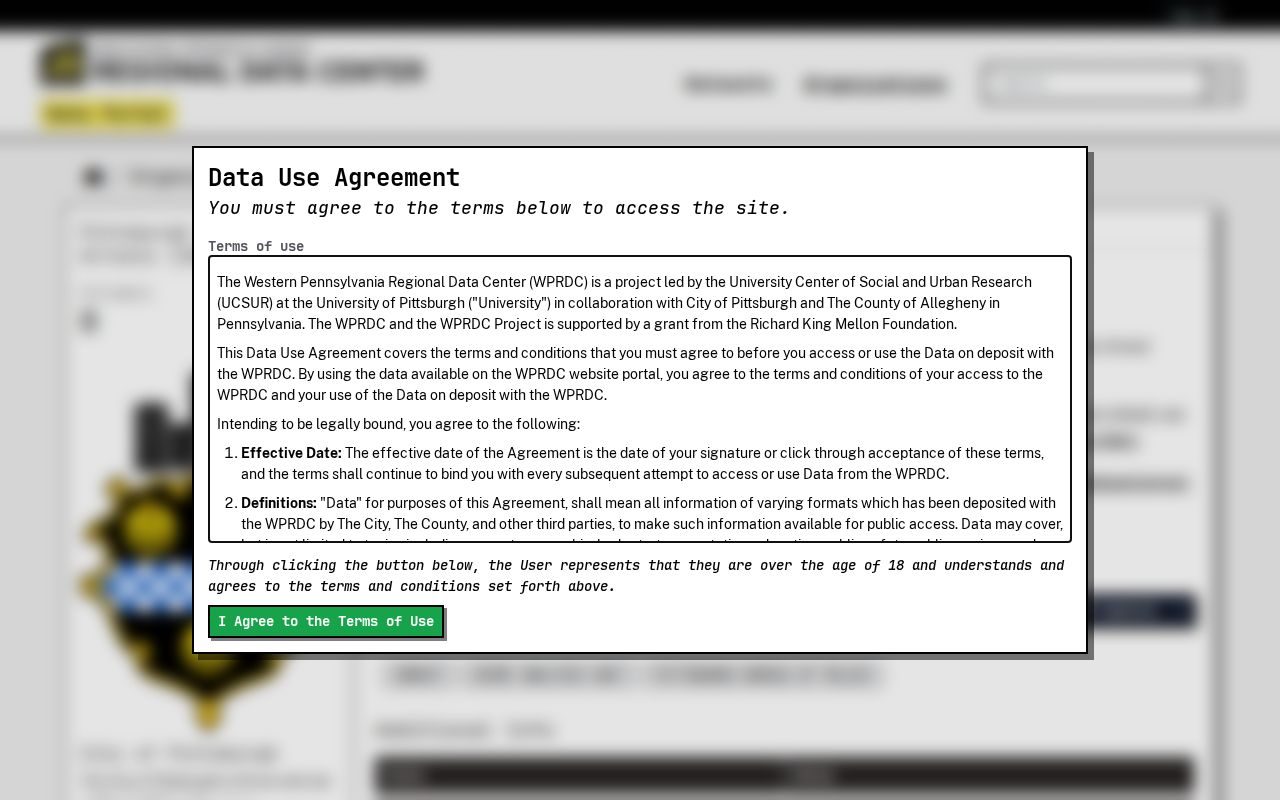
A screenshot here simply documents the data route itself. It is not a person-level arrest result and not a booking-photo display.
Pittsburgh Busted Crime Coverage
Local crime news in Pittsburgh travels through a handful of channels. WPXI, WTAE, and CBS Pittsburgh all run regional coverage. The Post-Gazette keeps a crime-and-courts desk. TribLIVE reports on area cases. The county or District Attorney's office issues official releases. Coverage is selective, though. None of these outlets maintains a running list of city arrests. None offers a standing Allegheny mugshot gallery either. For the wider source inventory, see Mugshots in the News.
Any photo in a news story deserves a second look at its credit line. One WTAE arrest story, for instance, labeled its image as an Allegheny County Police release. Other pieces might use a scene photo, a surveillance frame, or court material instead. That sort of image proves nothing about ACJ having a public booking-photo feed. To trace a case, pull the UJS docket or the clerk record. Then read the latest filing.
The Post-Gazette crime and courts section is one more regional outlet worth checking for case reporting.
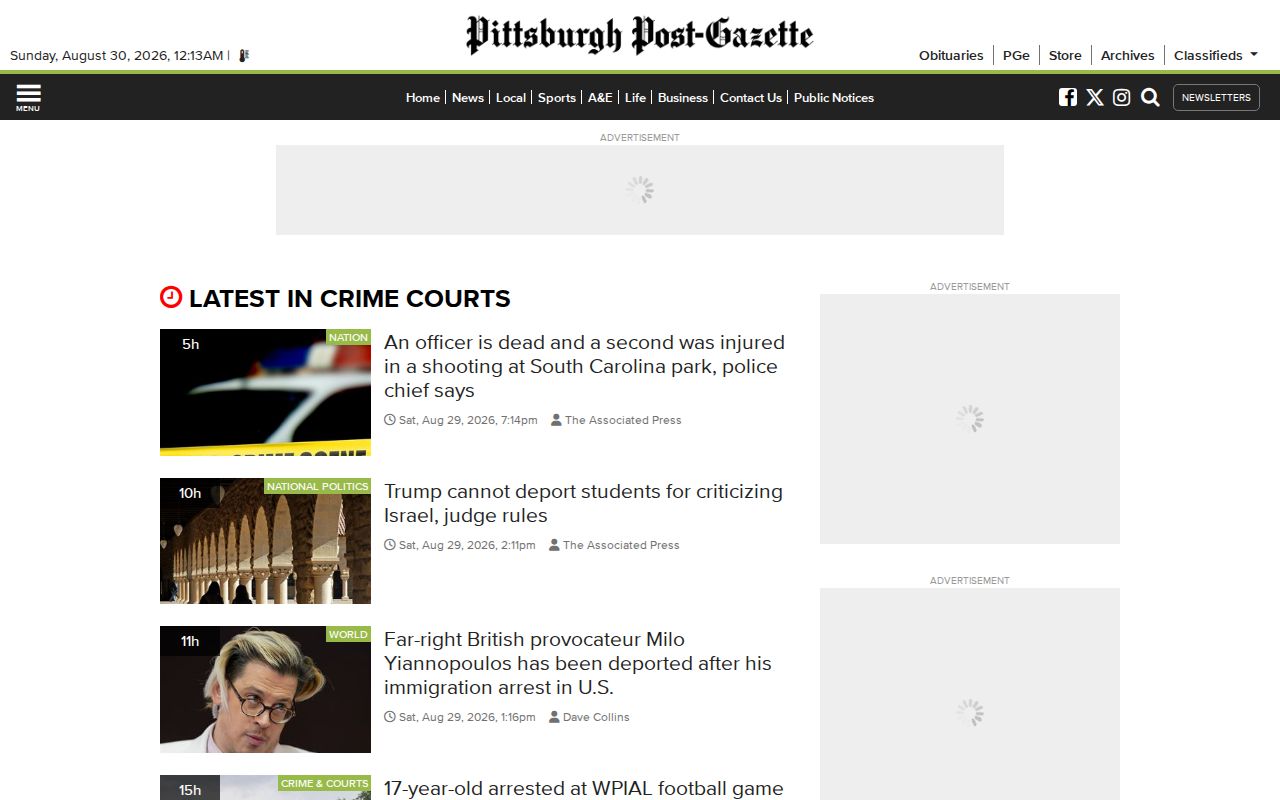
Its coverage runs event by event. For verification, trace each story back to the police, prosecutor, or court source it cites.
Pittsburgh Charges Need Context
A booking record only shows one early moment. It freezes a person at intake. A docket, by contrast, tracks the whole life of a case: filings, hearings, and outcomes that may not surface until months later. Charges get amended, cases get withdrawn, and final results can look nothing like the booking sheet. That gap matters. Grab the case number if you have it, then read the latest docket entry before you treat a charge as settled fact.
For city arrest history, keep the source and date of every item you save. The Public Safety Blotter gives incident updates straight from the city. Central Records handles police reports. ACJ answers narrow custody and booking-date questions through its official contact route, and its public reports offer aggregate operational counts rather than person-level lookups. That boundary is worth knowing, because an aggregate figure cannot confirm whether any named person was booked, released, or resolved. A city dataset also covers less ground than all of Allegheny County, since it omits arrests made by state or federal partners. Match each question to the office that holds the answer, and note the date you checked, since custody and court status shift quickly.